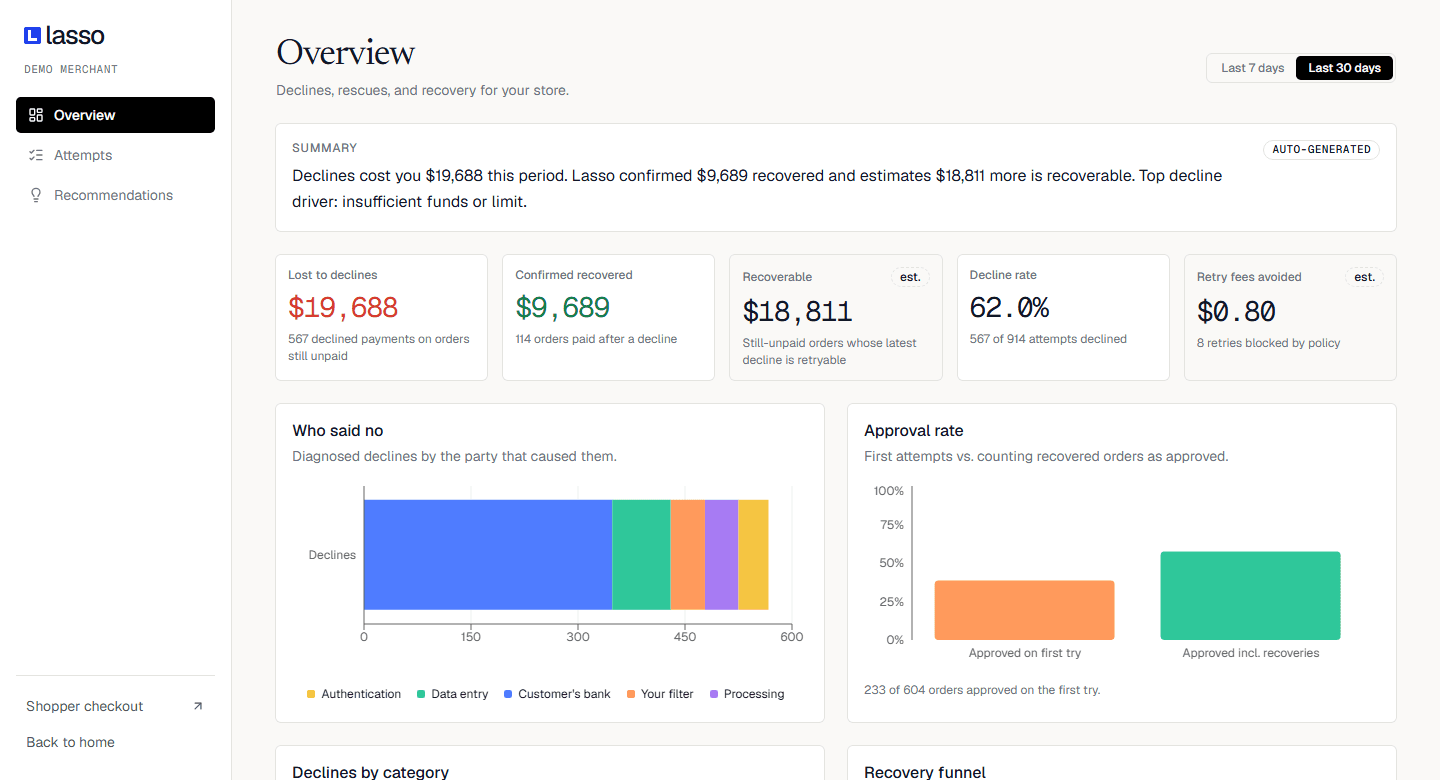
The merchant dashboard now pinpoints the cause behind every payment failure. See it

Every decline, explained

Lasso reads the data behind a failed payment and wins the sale back.

Fraud false positive on a Visa card

Scenario

Network

// what the bank actually said
"declineCode": "authentication_required",
"networkDeclineCode": "1A",
"actor": "AUTHENTICATION",
"visaCategory": 3,
"diagnosis": "AUTH_REQUIRED",
"retryAllowed": true,
"remedy": "STEP_UP_3DS",

One decline model across every card network and processor.

05Do not honor
51Insufficient funds
54Expired card
14Invalid number
N7CVV2 failure
65Authentication required

Safe by design, in plain terms

Read how decisions are made →

No raw card numbers. Lasso never handles card numbers; it works from the processor's decline data.

Test mode only. Only sk_test_ keys are honored; live keys never enable Stripe.

Network-neutral. Visa, Mastercard, Amex and Discover declines each follow that network's own rules.

Fraud signals stay hidden. Shoppers see a safe, plain-language next step, never why a bank suspects fraud.

Opt-in follow-ups. Recovery links go only to shoppers who asked for one, and only when a retry is allowed.

Estimates are labeled. Confirmed money and estimates never share a card style, so you can trust each number.

The cost of guessing at declines

Behind "payment failed" the issuer knows exactly why. The merchant usually doesn't. Most of what gets blocked automatically was never fraud, and most merchants never measure how much they lose.

213billion

dollars of sales falsely declined worldwide in 2025 (SEON estimate)

56billion

dollars of actual e-commerce fraud over the same period

58%

of automatically declined suspicious transactions are legitimate (Aite/ClearSale)

64%

of merchants track their false-decline rate at all

10%

of cart abandoners cite a declined card (Baymard, up to)

Payments built to be rescued

Find out why payments fail, and win the sales back. No keys needed in demo mode.